
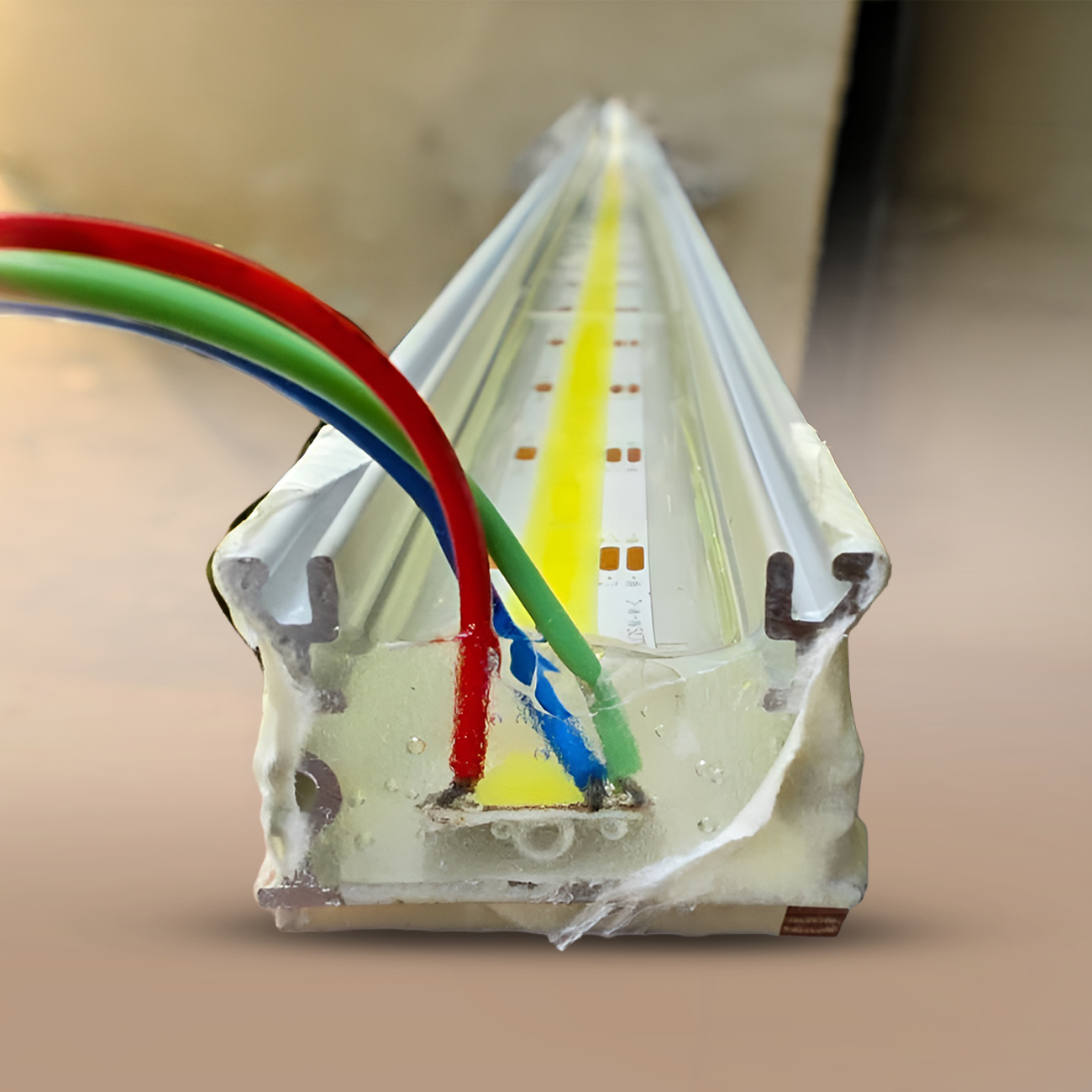
You’re here because you’re not just hunting for resin; you’re looking for the right transparent epoxy resin manufacturers who understand electronics, clarity, and reliability under stress. If your assemblies live in the real world—heat, humidity, vibration—you already know that “clear” isn’t enough. The resin has to protect, flow into tight geometries, cure consistently, and keep your design readable (labels, LEDs, indicators) without yellowing prematurely.
That’s exactly where we operate.
We formulate epoxies for potting and encapsulation that protect delicate assemblies transformers, PCB components, sensors, LED drivers, and coil windings and keep them visibly inspectable when you need transparency. From thin, wicking systems for dense boards to higher-viscosity fills for larger volumes, our job is to tune the chemistry so your product survives the field, not just the lab.
What makes a good transparent epoxy for electronics?
Three things matter most in real programs:
1: Clarity and stability
You want optical clarity that lets you read component IDs, see indicator LEDs, and spot voids without the resin going amber too soon. That demands a balanced formulation and the right cure profile.
2: Protection is where it counts
Mechanical stability, moisture resistance, and dielectric strength should match the application: high-voltage transformer casting, conformal potting on PCB modules, or sensor encapsulation that still “breathes” thermally. We map these needs to resin hardness, Tg, and filler choices so you don’t have to.
3: Processability
If the resin doesn’t flow uniformly, air traps and incomplete fills show up in the field—never a good place to learn. Correct viscosity, pot life, and cure speed are tuned to your potting equipment and cycle times. We supply guidelines and mixing ratios so operators can succeed on day one.
Where are our transparent epoxies used?
- PCB modules & sensors: Potting for moisture and mechanical protection while keeping visual access.
- LED drivers & lighting modules: Clear encapsulation that doesn’t hide status LEDs and tolerates thermal cycling.
- Transformers & coil windings: Encapsulation for high temperature/voltage zones; clarity helps QA see what’s happening beneath.
Now, if you’re evaluating transparent epoxy resin manufacturers, here’s how to separate marketing from manufacturing:
- Ask for application-driven tuning: A single “clear epoxy” won’t suit every enclosure depth or component density. We tailor viscosity, gel time, exotherm, and final hardness so your fill is complete, voids are minimal, and rework (if required) is planned, not improvised.
- Insist on process documentation: Clear guidance on mix ratios, tolerances, degassing, and cure schedules reduces scrap and speeds scale-up.
- Check portfolio breadth: If your product range spans electronics, electricals, and filters, it helps when the same partner can support epoxy, polyurethane, and silicone families for different risk profiles and throughput needs.
Why do teams work with us?
We build potting and encapsulation systems for harsh realities: coastal humidity, dust ingress, field heat, and installation mishaps. Our epoxy systems for transformers, PCB components, and sensor modules are formulated to resist heat and water, reduce corrosion risk, and keep assemblies running longer. When the spec calls for latent/hot-cure behavior or different viscosities across product lines, we design to that—so engineering doesn’t fight production.
Transparent doesn’t mean fragile.
Clear resins still need the backbone mechanical strength, dielectric performance, and thermal management. Where needed, we combine clarity with the right balance of rigidity and toughness and advise on cure schedules that limit internal stresses across larger castings or deeper enclosures.
If your design later needs a different chemistry (say, a flexible potting in a vibration-prone housing), our polyurethane and silicone ranges cover that too, so you don’t juggle multiple suppliers.
Production-first support
Every line runs differently. Should we use a gravity feed or meter-mix method? Vacuum potting or atmospheric fill? Cycle time targets? We match resin behaviour to your equipment constraints Train teams on the practicalities of handling, degassing, and curing windows—to increase first-pass yield and reduce rework. We also help you plan for seasonal shifts (shop-floor temperature and humidity changes and resin flow more than most people expect).
Who are we?
Veeyor Polymers has spent decades building epoxy, PU, and silicone systems around real application constraints in electronics, electricals, lighting, and filter bonding, among others.
Our R&D works alongside customers, adjusting viscosity, cure speed, and thermal characteristics to the job rather than forcing a one-size-fits-all SKU. That’s the difference between buying a resin and buying a solution.
If you’re comparing transparent epoxy resin manufacturers for your next build, here’s a simple way to frame the decision:
- Define your worst-case environment. Then pick resin parameters to that extreme.
- Pilot with your actual assembly. Validate flow into tight geometries, pot life on the line, and cure stresses in your enclosure.
- Lock the SOPs early. Clear mixing ratios, workable open times, and precise cure stages reduce variability and protect yield.
Veeyor Polymers is ready to help you move from “we need a clear resin” to “we have a robust, documented potting process.” If your team needs transparent encapsulation that stays clear, protects what matters, and scales cleanly on the line, talk to us. Among transparent epoxy resin manufacturers, choose the one that engineers alongside you not just one that ships drums.
Related Links: Top Epoxy Resin Manufacturers